
Florida Department of Health and HealthCall Partner on Standardized Data Collection
Enable Statewide Data Collection,
Expand Mobile Integrated Health
Listen to this Article
A new partnership between HealthCall and the Florida Department of Health is helping expand Mobile Integrated Health programs within EMS agencies across Florida. These agencies face a serious challenge: they need to collect data in a way that works for all of their communities, and in a way that works for statewide data collection, so that the DoH can build stronger advocacy positions by tracking community health outcomes. These agencies need to collect that data consistently in each encounter, and for the sake of efficiency (and preventing burnout), they need to minimize the time spent entering data into multiple systems.
The task is daunting, but by combining extensive research into MIH metrics with HealthCall’s seamless data collection, the Florida DoH is rising to meet the challenge, and setting an example for others to follow.
Like a Needle in a Haystack
In MIH, every community is different, and every program needs funding. Sadly, these aspects don’t work well together. Sustainable funding means the DoH needs to monitor program effectiveness and community health trends, but the sheer variety of community needs leads every agency to document differently. This may work well for their individual operations, but on the state level, finding health trends among these different document formats is like finding a needle in a haystack.
Of course, satisfying state needs increases the burden on individual agencies. For a given MIH encounter, a community paramedic may create a minimal, standardized ePCR record for the state, then switch to their more customized system and create a more detailed, longitudinal record using the same information. On top of simply being irritating and time-consuming, recording the same encounter in two different ways increases the risk of inconsistencies and errors, which interferes with both the agency’s ability to help patients and the state’s ability to see their results.
Combining Systems and Expertise
Florida’s DoH has partnered with HealthCall to create a solution: something that allows individual MIH programs to use a workflow tailored to their community’s needs, while translating their records into a NEMSIS-compliant format the state can use for high-level analysis.
The first step happens on the state level: the Department of Health identifies which MIH data elements they need for monitoring patient outcomes and community health trends.
From there, HealthCall works with individual EMS agencies to configure workflows that include the DoH’s standard data elements. HealthCall uses its highly flexible SMART Charts to align these data elements with the agency’s own operational assessments, placing questions where they naturally fit within the care workflow of different visit types. The agency’s paramedics no longer need to keep multiple lists of required questions, or mark some details for re-entry later. Data collection happens efficiently and organically within the clinical process.
What’s more, as soon as the user marks their SMART Charts as complete, HealthCall automatically gathers the state-relevant data and sends it to the Department of Health in the required format, no extra steps needed.
Setting up State-Wide
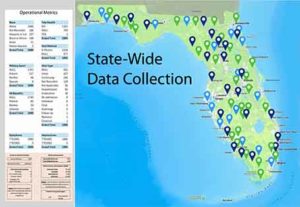
A typical setup includes the following:
- HealthCall meets with the agency to walk through the DoH’s data elements and discuss how they’ll be embedded into the agency’s SMART Charts.
- HealthCall sets up the agency’s SMART Charts, and back-codes agency-specific data (such as personnel and vehicle info) so that reports to the DoH will automatically include it.
- HealthCall works with the DoH to get credentials for automatically sending agency reports to DoH systems.
- Once the SMART Charts and DoH credentials are finalized, HealthCall meets with agency users to provide training, and the system goes live.
As the agency’s needs change and they refine their programs or launch new ones, HealthCall works with them to make sure their SMART Charts reflect their new workflows, while still seamlessly collecting state-level data. As for the state itself, the DoH is open to feedback regarding what data elements will improve their picture of overall community health.
Everyone Benefits
This model, with HealthCall bridging the gap between EMS and the DoH, benefits everyone.
For individual EMS agencies, having a single reporting system that’s both NEMSIS-compliant and customized for their needs means less overhead managing systems, less time spent on data entry, less frustration and fewer errors.
“HealthCall is an incredible EHR that saves us countless hours on documentation. It’s a true one-stop shop, with a support team that’s always responsive and genuinely helpful.” – Lt Bryan Lee, City of West Palm Beach FD, CORe Network
“HealthCall is an incredible EHR that saves us countless hours on documentation. It’s a true one-stop shop, with a support team that’s always responsive and genuinely helpful.”
For the Department of Health, having standardized data delivered in real time means a better picture of overall community health, with clearer insights into health outcomes and utilization trends.
For MIH advocates at any level, clear and measurable outcomes lead to stronger advocacy positions and more concrete evidence for funding initiatives.
And of course, for patients, seamless MIH encounters, programs with consistent funding, and data-driven health policies lead to better outcomes and a higher quality of life, no matter what state they live in.
Frequently Asked Questions
What challenge does the Florida Department of Health and HealthCall partnership aim to solve?
EMS agencies across Florida need to collect MIH data in a way that works for their individual communities while also meeting statewide data collection requirements. Without a unified approach, agencies often document encounters differently, making it difficult for the Department of Health to identify community health trends. At the same time, requiring agencies to enter the same data into two separate systems creates extra burden, increases the risk of errors, and contributes to staff frustration and burnout.
How does HealthCall allow local EMS agencies to use their own workflows while still meeting state requirements?
HealthCall uses its flexible SMART Charts to embed the Department of Health’s required data elements directly into each agency’s existing care workflow. Questions are placed where they naturally fit within the clinical process for different visit types, so paramedics do not need to maintain separate lists of required fields or re-enter data after an encounter. Once a SMART Chart is marked complete, HealthCall automatically gathers the state relevant data and sends it to the Department of Health in the required format, with no extra steps needed.
What format does HealthCall use when submitting data to the Florida Department of Health?
HealthCall translates agency records into a NEMSIS-compliant format that the state can use for high-level analysis. This allows individual MIH programs to maintain workflows tailored to their community’s needs while ensuring the state receives standardized, comparable data across all participating agencies.
How long does it take to onboard a new EMS agency into the Florida DoH partnership?
Setting up a new agency typically takes 3 to 6 weeks. The process includes a meeting to review the DoH’s required data elements and discuss how they will be embedded into the agency’s SMART Charts, configuration of the SMART Charts with back-coded agency specific data such as personnel and vehicle information, coordination with the DoH to establish credentials for automated report submission, and a training session with agency users before the system goes live.
What happens as an agency’s programs change over time?
HealthCall works with agencies on an ongoing basis to update their SMART Charts as their needs evolve, whether they are refining existing programs or launching new ones. The Department of Health also remains open to feedback about which data elements would improve the overall picture of community health, so the model is designed to adapt as both local and statewide priorities change.
Who benefits from the HealthCall and Florida Department of Health partnership model?
The model benefits multiple groups. Individual EMS agencies spend less time on data entry, manage fewer systems, and experience fewer errors. The Department of Health receives standardized, real-time data that provides a clearer picture of community health outcomes and utilization trends. MIH advocates gain measurable outcomes that support stronger funding arguments. And patients benefit from more seamless care encounters, better funded programs, and health policies informed by reliable data.
Has this approach produced results for agencies already using it?
Yes. Lt. Bryan Lee of the City of West Palm Beach Fire Department and CORe Network described HealthCall as an incredible EHR that saves countless hours on documentation, calling it a true one-stop shop with a responsive and genuinely helpful support team.