
Community Paramedicine & Mobile Integrated HealthCare Platform
Go Beyond Emergency Care
Community Paramedicine and Mobile Integrated Health (CP-MIH) extend emergency medical services beyond the 911 incident. They place paramedics and multidisciplinary partners in scheduled and unscheduled community work: assessment and treatment in the home, follow-up after hospital discharge, behavioral health and substance-use coordination, and ongoing support for patients whose repeated emergency use is driven by chronic illness or social need.
The model exists because a large share of demand on emergency and hospital systems is not best met by transport to an emergency department. Aging populations, rural distance from specialty care, unmanaged chronic disease, behavioral health crises, and fragmented post-acute handoffs all produce avoidable utilization. CP-MIH is one of the delivery responses health systems, EMS agencies, public health departments, and payers now use to meet that demand in the community, while 911 response and the electronic patient-care record remain in place for acute emergencies.
“The Missouri EMS Association is ecstatic to partner with HealthCall to drive the mobile healthcare industry to the next level…”
Community Paramedicine is typically EMS-led. Paramedics carry primary responsibility for on-scene and in-home care and for coordinating the local network around the patient. Mobile Integrated Health uses many of the same clinicians, but the partnership set is often broader; hospitals, primary care, behavioral health, social services, and, in some programs, law enforcement or crisis teams. In practice the two labels overlap. What distinguishes a given program is its mandate, its partners, and the population it is accountable for, not the acronym.
Those programs are not interchangeable. A rural ambulance district standing up withdrawal and chronic-disease protocols is not the same operation as an urban crisis-intervention partnership or a state effort to collect comparable MIH data across counties. Each still depends on a longitudinal view of the patient: what was known before the visit, what was done on scene, and what must be closed in the days and weeks that follow. Incident documentation alone cannot carry that work.
Treat-in-place, triage to an alternate destination, remote monitoring, and closed-loop referral are methods inside this model. They sit beside the 911 record.
One Platform, Hundreds of Programs
HealthCall offers a comprehensive suite of outcomes-proven Programs, each serving as a guide to both patients and care team members in following best practices and evidence-based medicine.
Lowering 911 call volume (high utilizers)
Decreasing fall risk
Mitigating substance abuse disorders
Reducing mental health-related recidivism
Improving chronic care management and reducing readmissions
Providing on-scene occupational healthcare
Responding to emergency interventions
Learn more about the full suite of HealthCall Programs
Launch your new program quickly
We help clients launch new programs quickly with a combination of ready-to-use tools and customized assessments built on years of successful implementations.
In addition to programs, SMART Charts gives you unprecedented freedom in documentation immediately. In a click of a button, select any of the dozens of HealthCall Standard SMART Charts for clinical and administrative documentation. New clients are typically in production within two to four weeks.
New Programs and Custom SMART Charts can be added after launch as well, typically in just a matter of days.
Connect Your Community
The HealthCall Community Care Network enables public, private, charitable, and faith-based organizations to work more efficiently together while keeping the patient at the center of the care model.
Paramedics, healthcare practitioners, behavioral health, social services, and law enforcement can quickly and easily create security-compliant care teams to collaborate on tasks and share patient information in real-time. Simply select the relevant patient information to share and choose from limited to full access.
Connecting community-wide services and resource within patient-centric care teams enables the delivery of more efficient and appropriate care in less time with better outcomes.
“You get an incarcerated person out of prison and into treatment right away, yes, you save on the monetary costs in terms of jail time, housing, going through the court system…”
Provide Better Care
The Patient-Centric Architecture enabled by the HealthCall Care Delivery platform is specifically designed for providing highly diversified care in the most challenging environments. Unlike other products which are based on an episode of care, HealthCall is built on a patient-centric data model.
Continuum of care (vs Episodic)
Document Freely
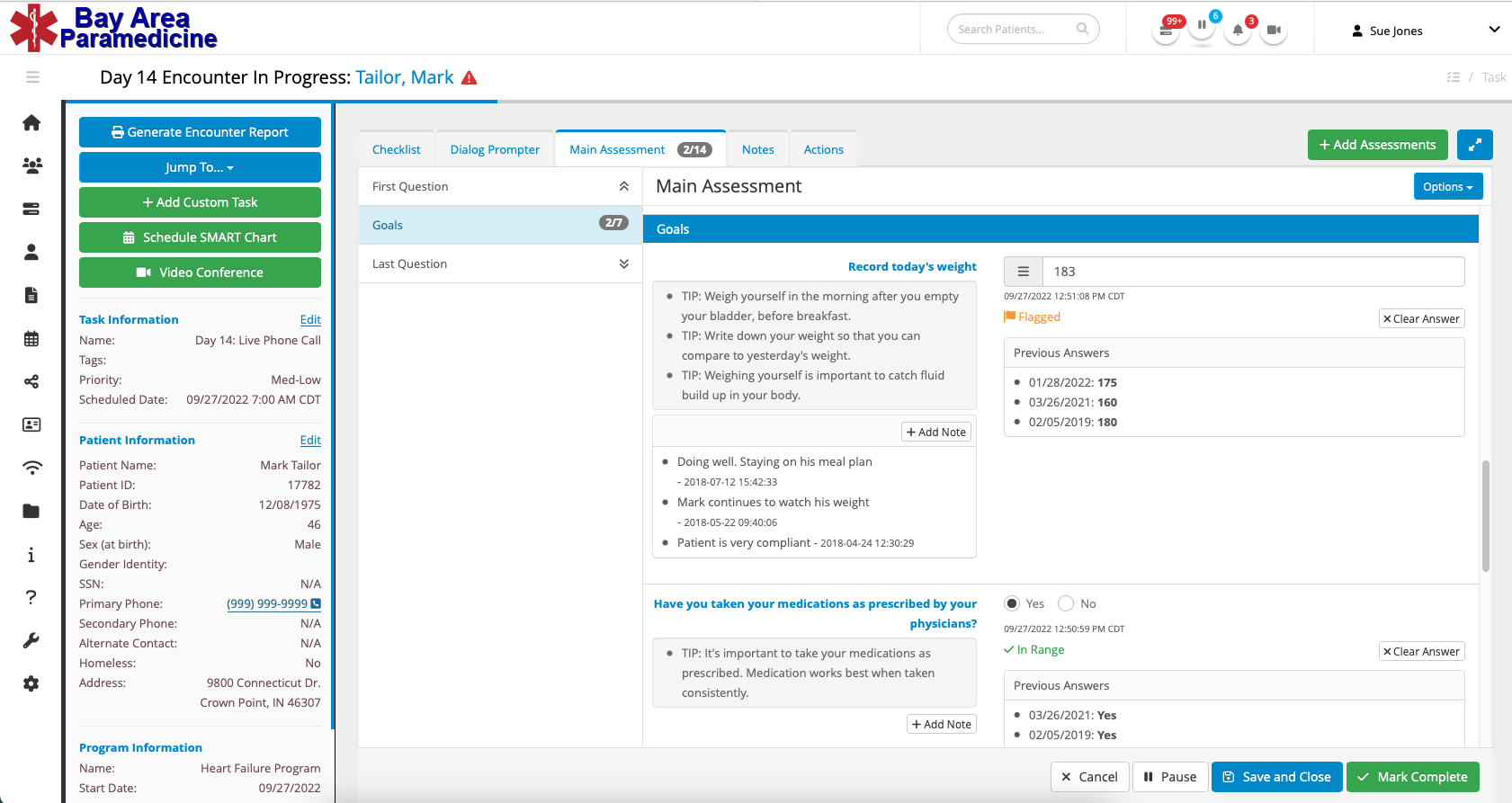
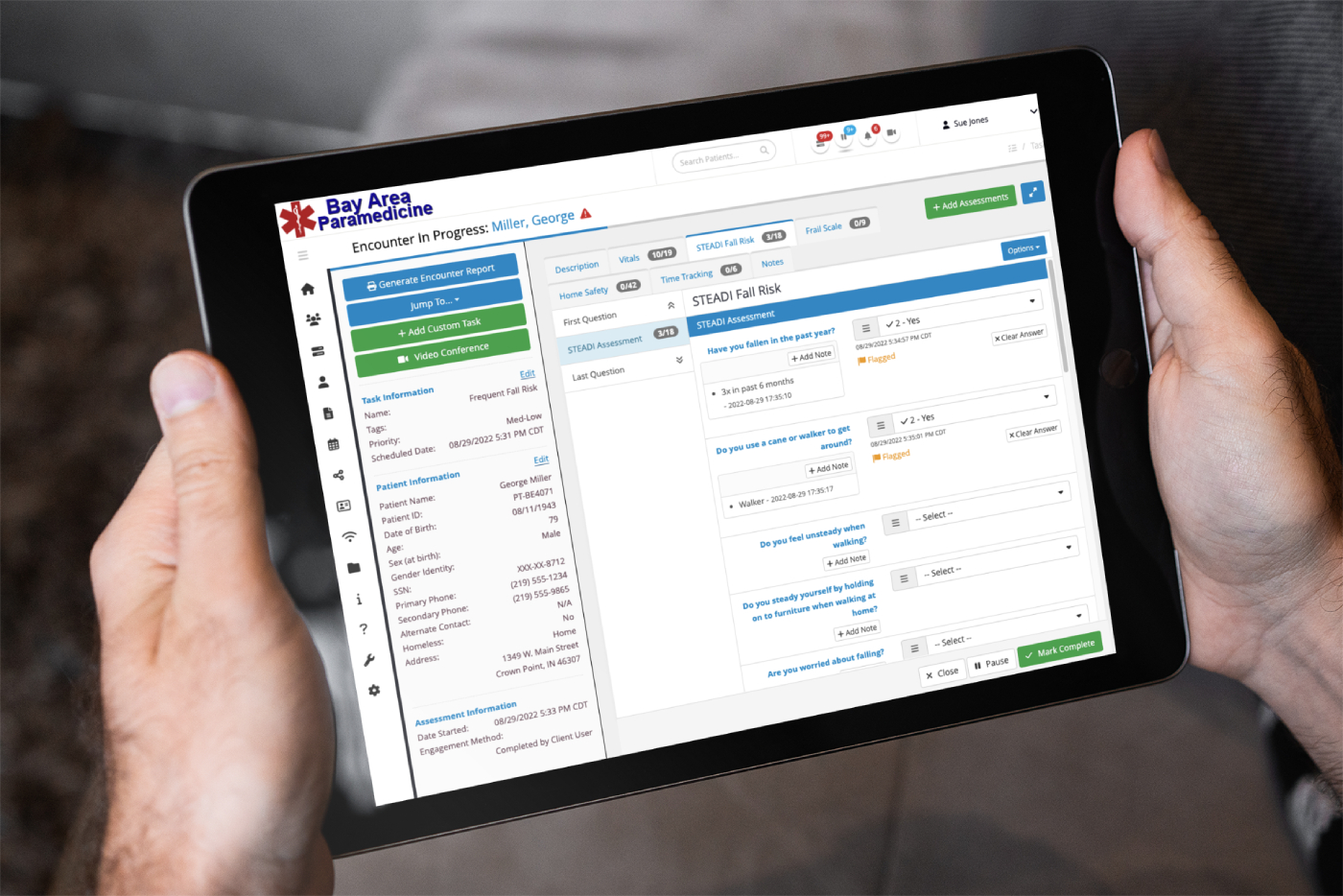
HealthCall enables an unprecedented level of versatility in documentation through the use of HealthCall Programs and SMART Charts. Providing diversified care in the field presents unique challenges every day. SMART Charts frees those on scene to maximize their experience and expertise to document all of the important and relevant issues at the point of care. Quickly and easily choose from a wide range of clinically validated and standardized assessment tools such as the PEAT Scale, DAST-10, Frail Scale, PHQ9, CAT Questionnaire, and more.
SMART Charts can also include custom assessments to collect important clinical data, such as specific vitals or Head-to-Toe, as well as administrative information like Time Tracking and Community Referrals.
Download the SMART Charts Sales Sheet
Follow Best Practices
“We have very limited communication modalities in offshore medicine, and the medium that connects our medical team to these rigs in the Gulf is HealthCall”
Grow Your Program
Explore how the following fully integrated services enable better care for more people in less time.

Care Coordination
- Care Network
- Task Collaboration
- Call Center Tools
- Care Plans
- Task Manager
- Telehealth Video
- Decision Support Tools
- Workflow Management

Electronic Health Record
- SMART Charts
- Clinical Status
- Medication Record
- History ICD10
- Robust Notes
- Document Management
- Goals Tracking
- Patient Portal

Patient Engagement
- APR Assessments
- Remote Patient Monitoring RPM
- Health Literacy
- Live Transfer
- Universal Device Support
- Telehealth Video
- Patient Portal

Workflow Automation
- ANSWERS® Wellness Programs*
- Behavioral Health*
- Breathe Easy*
- Diabetic
- Heart Health*
- High Utilizer Group* (HUG), High Risk Care (HRC)
- Joint Replacement:
- Non-Invasive Ventilation (NIV)*
- PAP therapy, certification, resupply
- Pregnancy Program, High Risk
- Resupply*