

Community Care Networks

Universal Device Support
Integrated Telehealth

LiveCall Tracking
SMART Charts™

Electronic Health Record
Encounter Management

Workflow Automation/ Proven Care Plans

APR/ Remote Patient Monitoring
Dashboard
Report Generator
Satisfaction surveys

Security: HIPAA, HITRUST
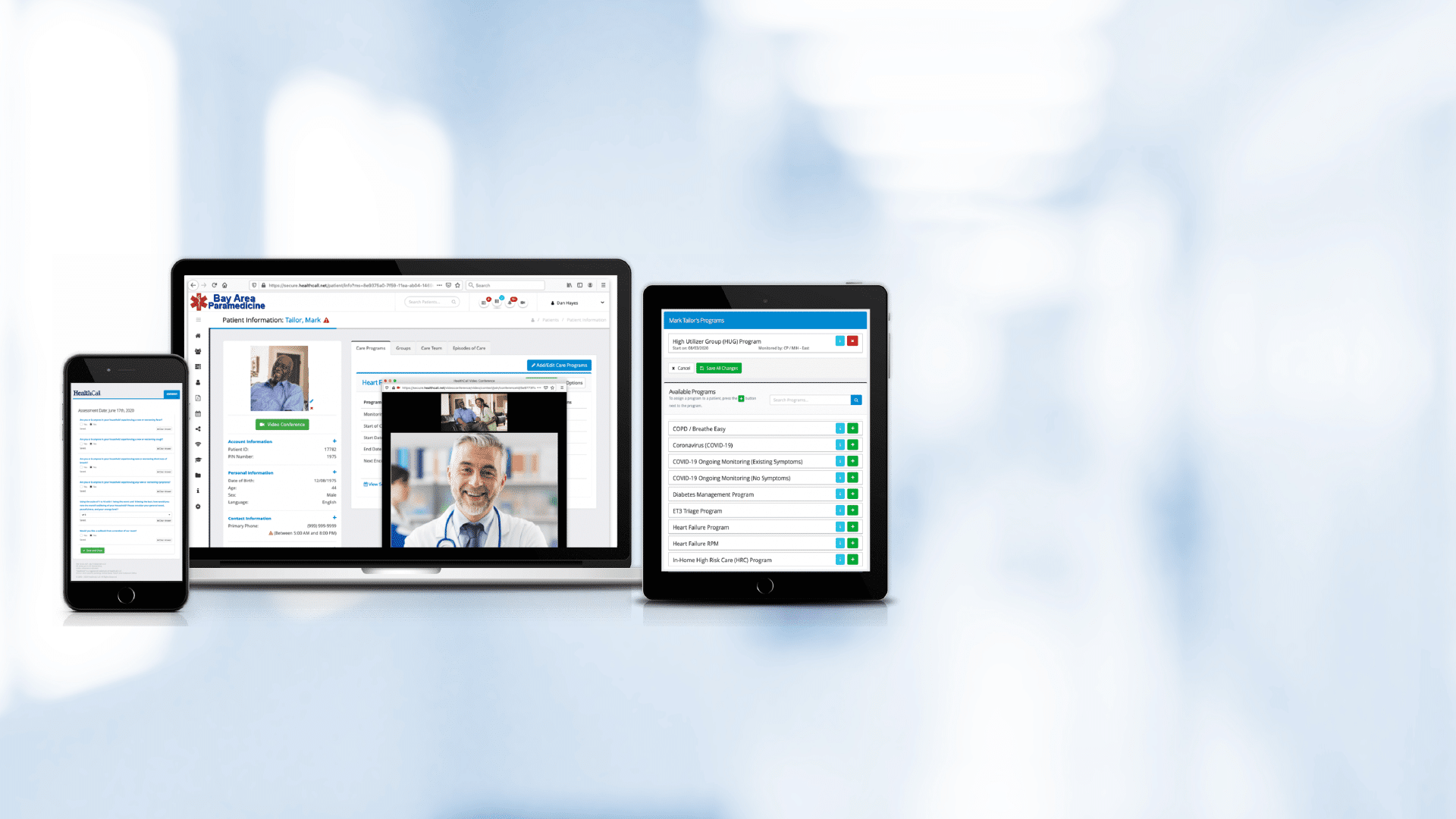
The #1 Care Delivery Platform™
You are focused on helping people, caring for them, and connecting them with the best, most appropriate care. That’s why we designed our patient-centric care delivery platform to be flexible and easy to use, adapting to and enhancing your existing workflows.
With an intuitive interface you can use on any device, documentation tools supporting everything from freeform encounter narratives to a full library of standard assessments, and an interface that utilizes voice-to-text and AI grammar assistance, we enable you to document even the most diverse care.
And with a HIPAA-compliant Care Network to make referrals, share care plans, and coordinate care with multiple providers and even entire communities, we help you quickly connect patients with the right resources and support.
HealthCall’s full suite of features is here to help you provide your best care for more people in less time.
Connect Your Community
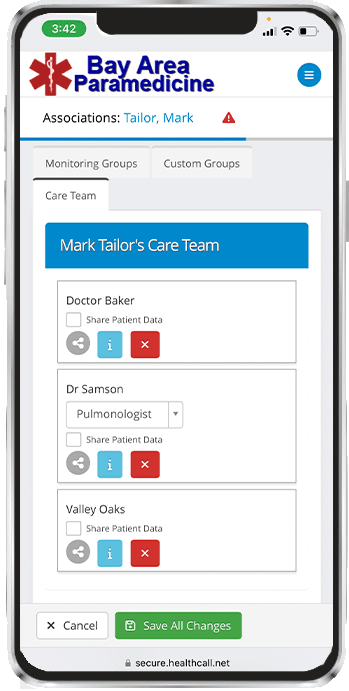
Community Care Network
Highly scalable: HealthCall Community Care Network enables the rapid expansion of secure collaboration with primary and ancillary care providers, mental health and social services, and connects your entire community of resources.
Provide individualized care specific to each patient’s needs, Care teams safely and securely communicate with their members and easily share information to help people get the right care they need. In real-time, assessments are scheduled, action items are assigned, and reports are shared. The entire care team is connected and engaged. This enhances accountability, ensures transparency, and ultimately delivers a higher level of patient care.
Schedule transportation, arrange a meal or delivery of medical equipment for your patient. You can do this and more, quickly and securely.
The Care Network is one of the many ways HealthCall helps dramatically improve the lives of the individuals you serve while greatly decreasing the costs to the community. All of this and no monthly per-user fees to stifle your connected community.
Accessible From Any Device
Universal Device Support
Cloud based and cross platform accessible: Consistent user experience across desktop, laptop & tablet computers, and smartphone devices, regardless of operating system (Windows, MacOS, iOS, Android, etc.).
Cloud-based: works with current operating systems
Fully web based: No apps to install on devices, no software on servers
Secure, compliant, and trusted nationwide
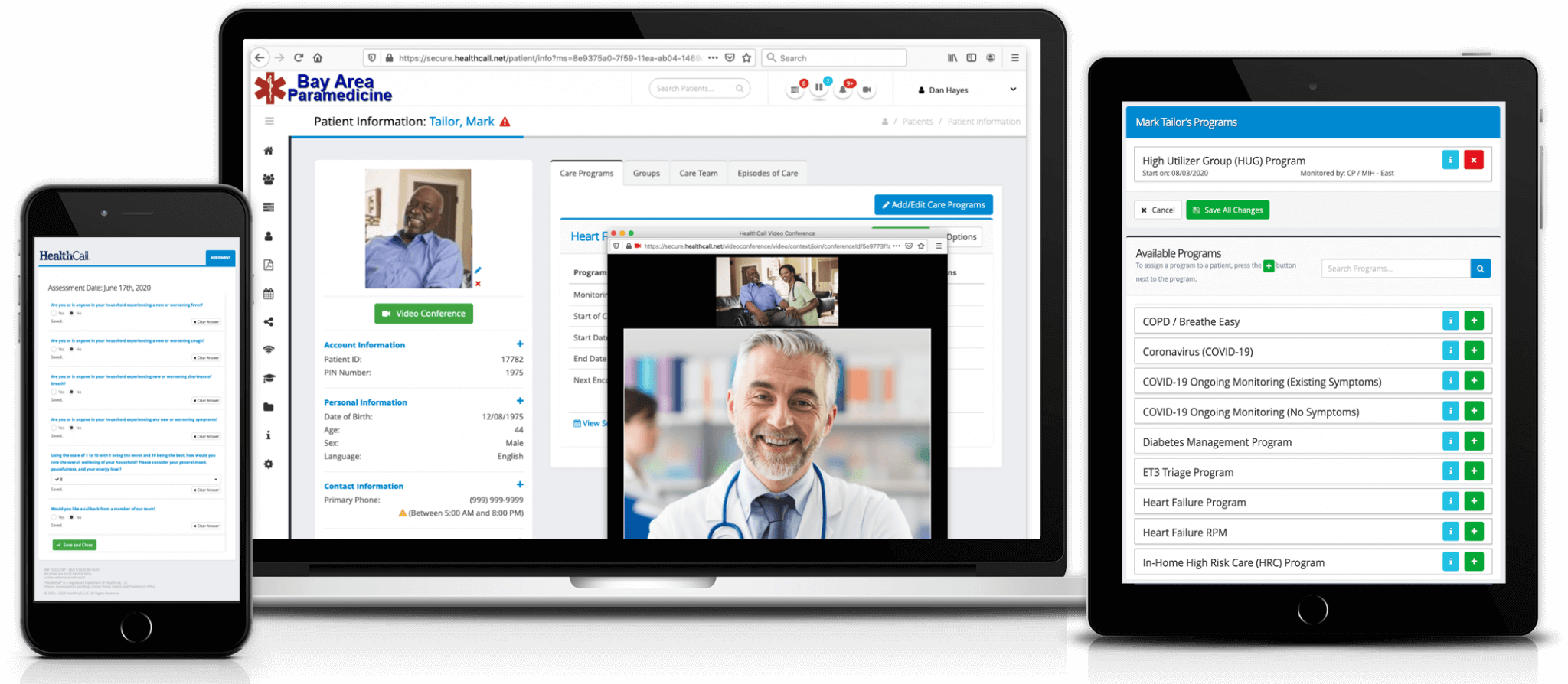
Be There Even When You Can’t
Integrated Telehealth
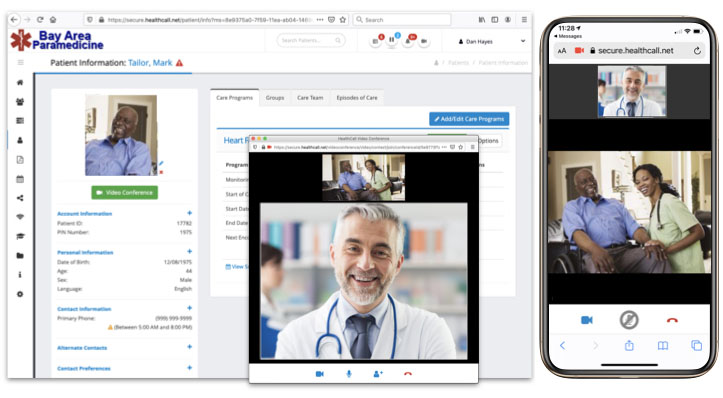
Record the Call In Record Time
LiveCall Tracking
Objective individual & team measures
Call metrics include call time, duration, and phone number
Uncharted Territory?
Not for Your Clinical Data.
SMART Charts™
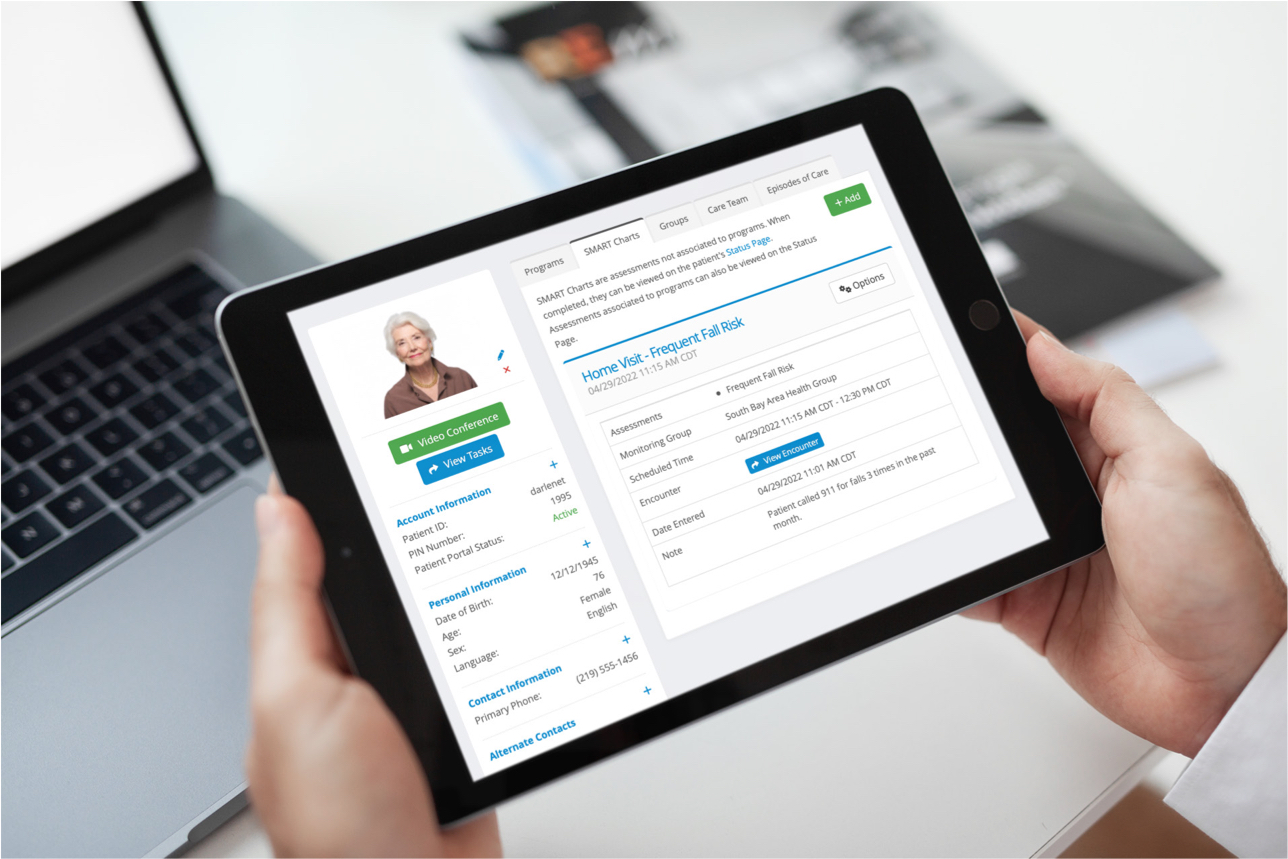
Standardized and validated: Providing diversified care in the field presents unique challenges every day. SMART Charts™ frees those on scene to maximize their experience and expertise to document all of the important and relevant issues at the point of care.
SMART Charts can also include custom assessments to collect important clinical data, such as specific vitals or Head-to-Toe, as well as administrative information like Time Tracking and Community Referrals.
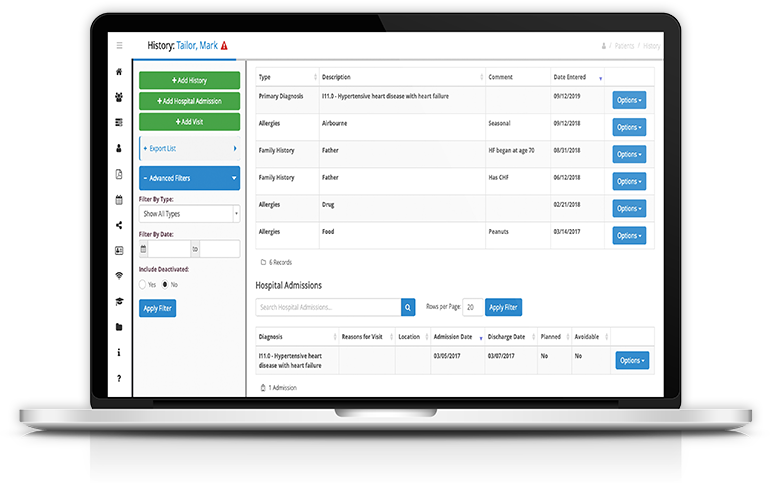
An EHR without the Steep Learning Curve
Electronic Health Record
Comprehensive narrative note tagging and filtering
Practice Process Makes Perfect
Encounter Management
Enables transparency across geographically dispersed care professionals
Prompters and individualized decision support tools help ensure predictable outcomes
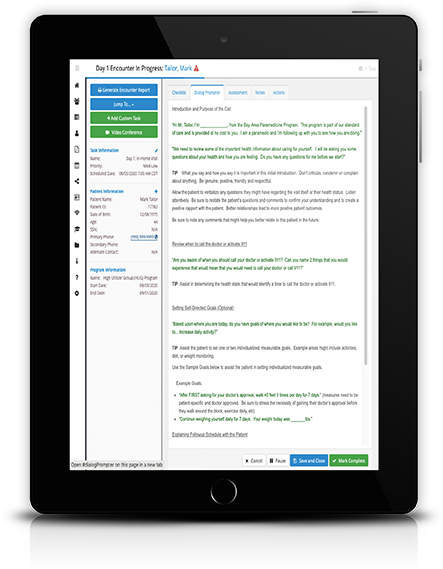
One Platform.
Hundreds of Programs.
Workflow Automation/ Proven Care Plans
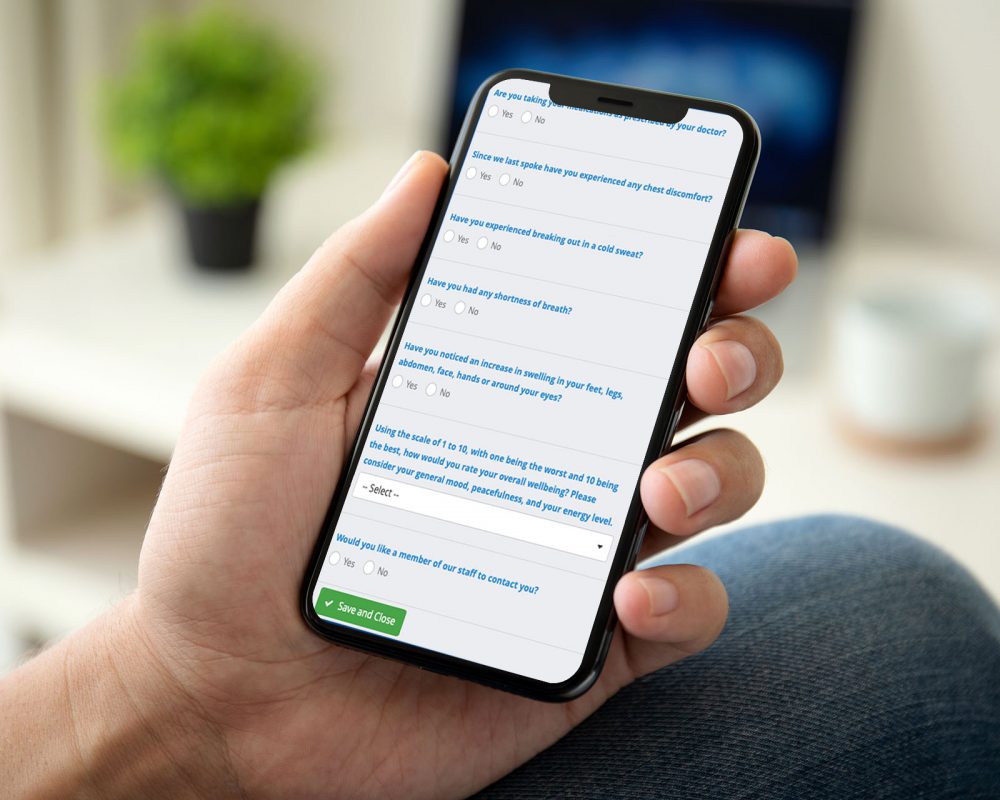
Know Who to Call Before They Call 911
Remote Patient Monitoring/ APR
“Using the HealthCall-APR system is like having an extra employee taking care of patient follow-up.”
Built for Easy Integration
Integration Solutions

In every case, our goal is to make HealthCall conform to the user’s system and operations, not the other way around. We’ll work directly with your IT and clinical teams to gain a clear understanding of your needs, limitations, and opportunities. Then we’ll create a seamless integration solution that makes HealthCall a welcome addition to your existing system.
“By linking [HealthCall] and EMS records, first responders can review information about established patients in real-time, leading to informed emergency responses… This can be particularly useful for frequent utilizers of EMS and CP services and those who may not be capable of providing a reliable medical history.”
Built for Easy Integration
Integration Solutions
“By linking [HealthCall] and EMS records, first responders can review information about established patients in real-time, leading to informed emergency responses… This can be particularly useful for frequent utilizers of EMS and CP services and those who may not be capable of providing a reliable medical history.”
What’s Up? Now You Know
Interactive Dashboard
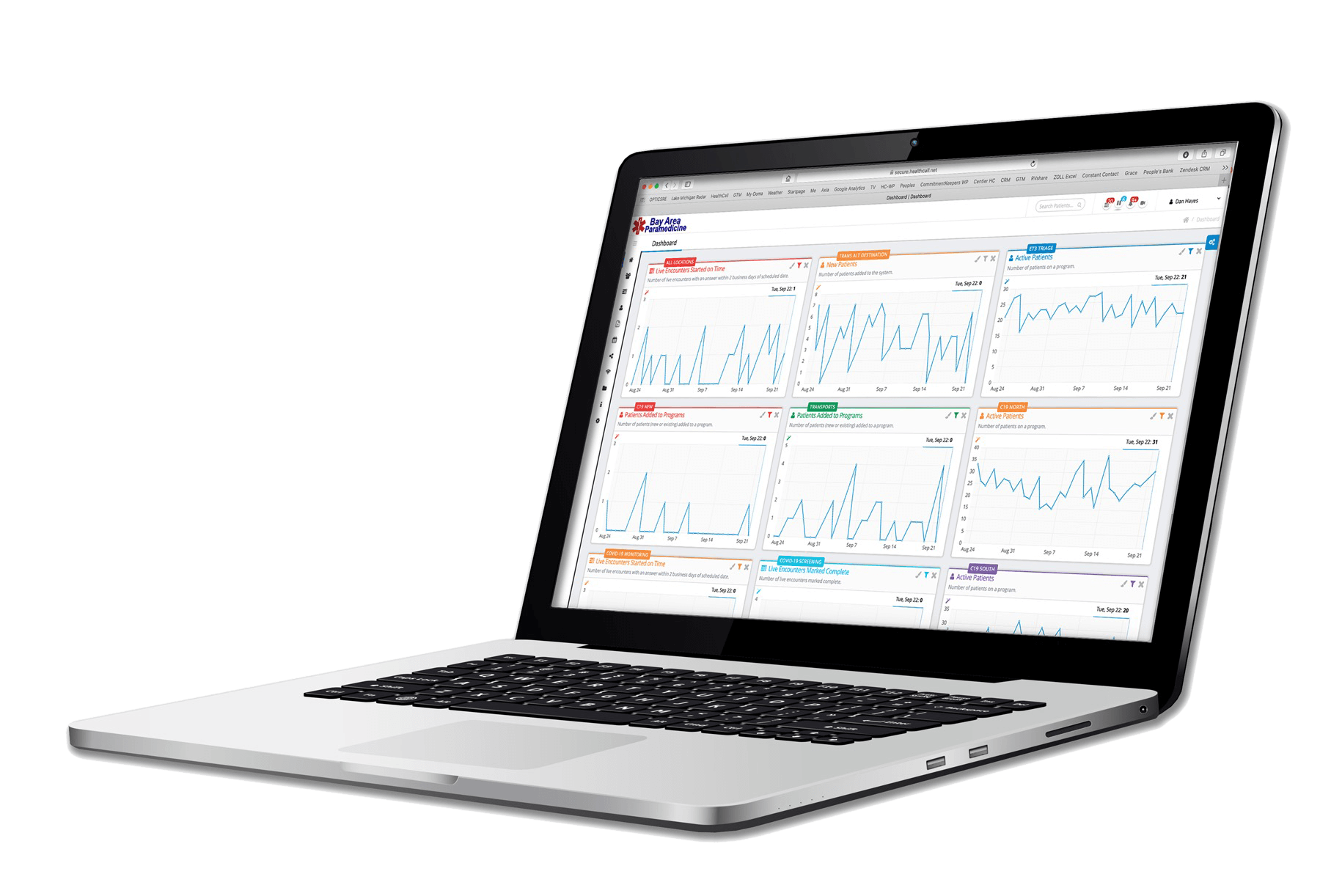
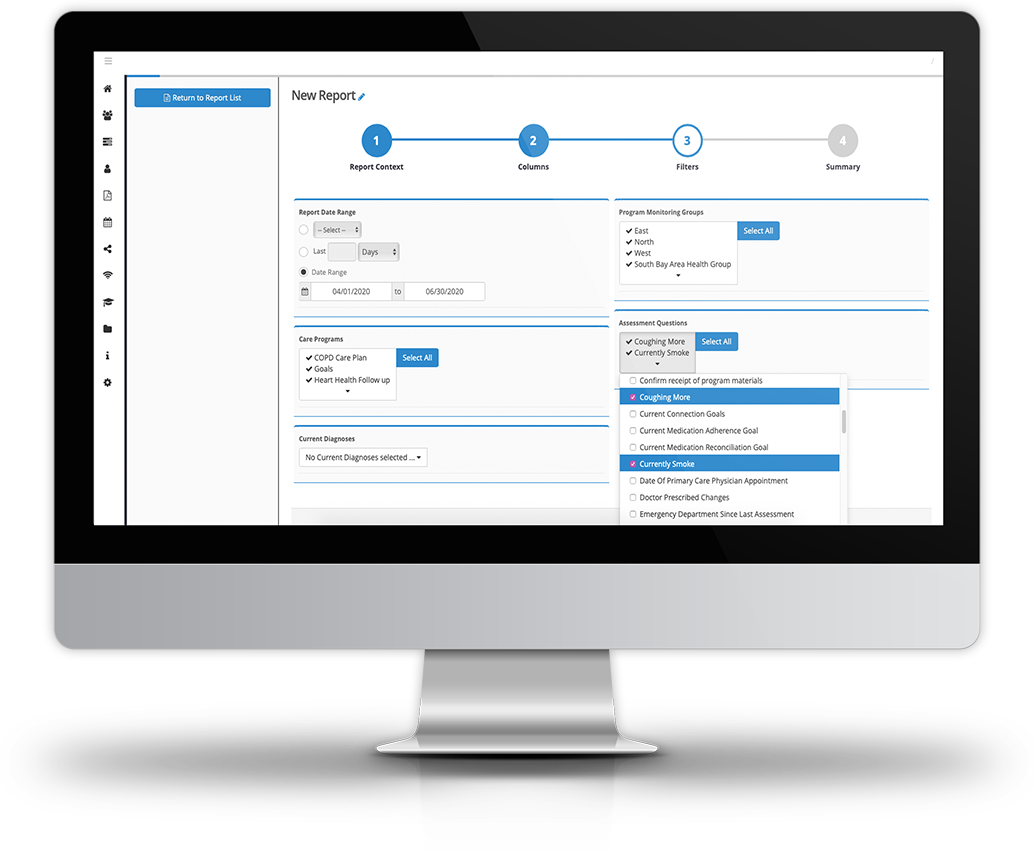
Document Your Data and Know Your Numbers
Report Generator
Create robust monthly reports showing data, trends, and more
Prove Just How Good You Really Are
Satisfaction Surveys
Use preconfigured satisfaction surveys or customize as needed
100% Automated satisfaction surveys, no burden on staff
Objective third-party validation of your service
Get timely feedback, correct issues before they become problems.
How We Prioritize Security and Privacy
Security
Secure: Information security is our highest priority at HealthCall. Without it, we would not be able to provide a trusted care delivery platform that allows our clients across the United States to care for the people in their communities.
We understand the importance and sensitivity of the patient data our systems manage. At HealthCall, we take the security of our clients and their patients very seriously. By making this our top priority, we help protect not only our business, but also the availability, integrity, and confidentiality of protected health information, or PHI.
To safeguard our clients’ data, our security infrastructure is HIPAA-compliant and built upon a foundation of recognized industry security standards. HealthCall is SOC 2 compliant, demonstrating our commitment to maintaining strong controls that support the security, availability, confidentiality, processing integrity, and privacy of the systems and data entrusted to us.
What Is SOC 2 and Why Is It Important?
SOC 2 is a reporting framework developed by the American Institute of Certified Public Accountants, or AICPA. It is designed to evaluate an organization’s controls related to the secure handling of customer data.
SOC 2 is based on the AICPA Trust Services Criteria, which include security, availability, processing integrity, confidentiality, and privacy. These criteria help demonstrate that an organization has appropriate controls in place to protect sensitive information and support reliable service delivery.
For healthcare technology companies, SOC 2 is an important way to demonstrate accountability, transparency, and operational maturity around data protection. By maintaining SOC 2 compliance, HealthCall reinforces our commitment to the security, privacy, and trust our clients and the communities they serve depend on every day.
Ready for What Comes Next
Flexible Platform
Frequently Asked Questions
How does HealthCall help programs track 911, EMS, ED, and hospital utilization?
HealthCall provides a standard utilization report for clients with an active ePCR integration. It compares 911 and hospital utilization 30, 60, and 90 days before and after a patient’s program enrollment. This allows programs to evaluate utilization trends by patient population, diagnosis type, program, geography, and time-frame, replacing anecdotal success stories with measurable data.
Can HealthCall measure improvements in patient health beyond utilization data?
Yes. HealthCall supports a wide range of patient assessment tools covering general wellbeing, depression, addiction, satisfaction, and other key domains. These patient reported outcome measures can be paired with clinical assessments, vital signs, risk scores, care plan progress, remote monitoring data, and encounter documentation to create a complete picture of patient improvement, even before changes appear in claims or hospital data.
How does HealthCall support quality reporting and HEDIS-aligned measures?
HealthCall’s customizable assessment tools and SMART Charts allow programs to build required data elements directly into clinical workflows. Programs can design assessments around chronic disease management, medication adherence, behavioral health screening, blood pressure monitoring, social determinants of health, and preventive care gaps. Required fields and guided workflows ensure data is captured consistently at the point of care, making reporting more reliable and reducing dependence on manual re-entry or spreadsheets.
What types of program activity data can HealthCall help document?
HealthCall allows programs to track assessments, encounters, referrals, care plans, follow ups, monitoring events, outreach attempts, and completed interventions. These activities can be analyzed by patient need, diagnosis type, risk category, agency, county, program, or date range, making it easier to answer the practical questions that funders and oversight teams ask.
How does HealthCall handle reporting across multiple partner organizations?
HealthCall standardizes the data elements required for reporting while preserving flexible documentation for local programs. SMART Charts embed required fields, guided assessments, and reporting logic into day-to-day workflows, so teams document consistently without being forced into a single operational model. This supports the comparable evidence CMS and state leaders need while respecting how care is actually delivered at the local level.
How does HealthCall help programs stay audit-ready?
HealthCall creates a comprehensive, audit-ready record of care delivery that includes referrals, encounters, assessments, follow-ups, patient engagement, protocol adherence, utilization trends, and measurable outcomes. Since CMS requires milestones, metrics, baselines, and targets to be reviewed and approved, and ties continued funding to satisfactory progress, having a reliable documentation infrastructure is essential for RHT participants.
What outcomes have HealthCall-supported programs already demonstrated?
HealthCall-supported programs have reported reductions in emergency room visits, avoided hospital and ER admissions, decreases in fall-related transports, reductions in overdose deaths, lower 911 transport rates, and high rates of treatment without transport. These results represent the types of clinical, operational, and financial outcomes that rural health programs will increasingly be expected to track, validate, and report under RHT.